· 5 min read
Kayaking Korčula: Hidden Islands, Secret Beaches & Sunset Wine
By Sarah & Ivan Ćosić, Royal Croatian Tours
Hello everyone! Today I want to tell you about one of the most fun things we've done as a family in a long time: sea kayaking around the little islands off Korčula.
We met up with our local partners, Spirit of Korčula, in Lumbarda, a village on the eastern tip of Korčula island. Boris, our guide, told us right away that this wasn't just a kayak tour. It's about four hours, and it's part paddle, part walk and part food tour. Oh, and one more rule: everyone has to paddle. No free rides here! Ha!
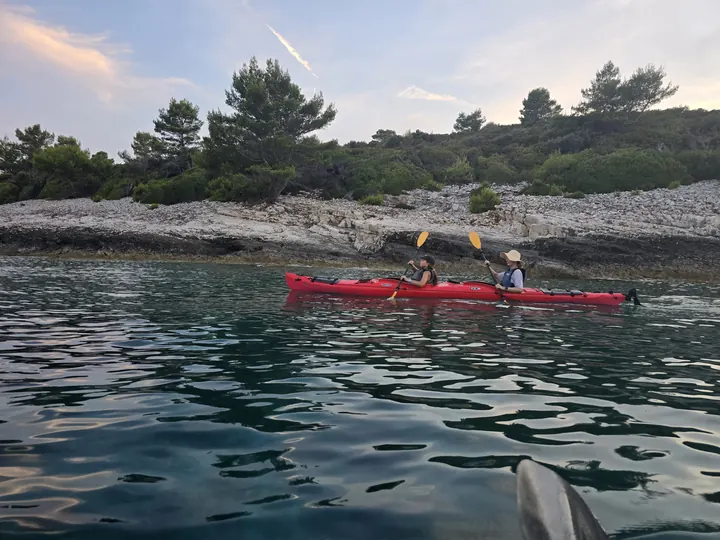

Vrnik, an almost abandoned island
Just off the shore from Lumbarda there's a whole little archipelago of tiny islands, and the first one we paddled to, Vrnik, has the most interesting story. Boris told us around 300 people used to live in its village. Today there's only one family left.
It's beautiful for swimming, though, and lots of people come over just to spend the day on its quiet beaches.
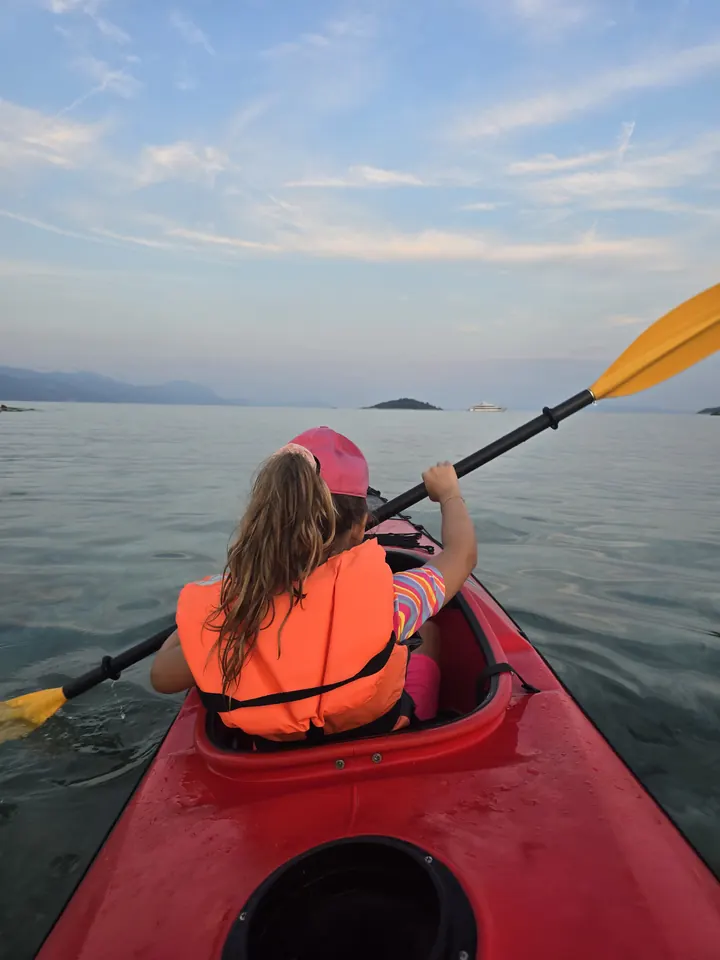
So how was the paddling? Ollie and I were a team, and I'm proud to say we kept up with the boys! But I'll be honest with you: my arms were sore after only a few minutes. It definitely takes some power.
Why Korčula has mongooses (and no venomous snakes)
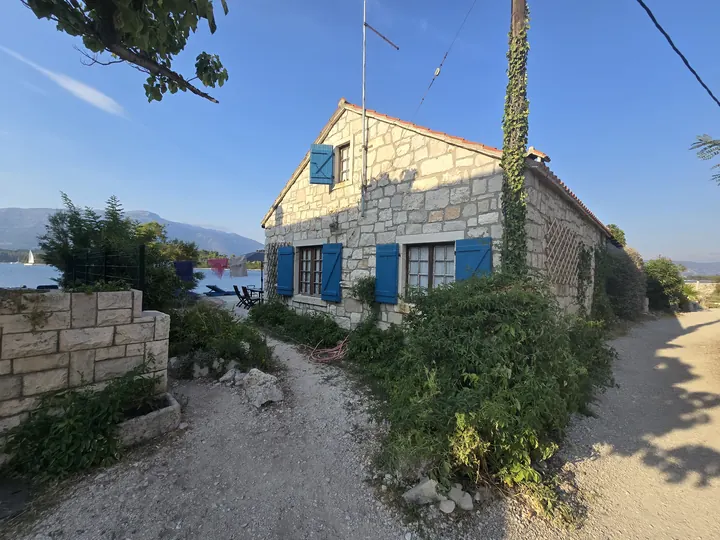
Next we hopped out for a short 20-minute walk. Boris said it's a very safe area for walking, because there are no venomous snakes, and the reason surprised us all.
Korčula has mongooses! Back in the day, local landowners, winemakers and olive oil makers brought mongooses from India to protect the people working in the vineyards and olive groves from snakes. Back then a snake bite was a real threat. Today you'd just call for help on your phone, but the mongooses are still here.
Boris also showed us old photos of how the island used to look. Until about the late 1960s it was basically a stone desert, because so much stone was quarried here. He said that if they had kept going, it would have ended up a flat island! Instead they stopped the stone production and focused on tourism, and now it's lovely and green.
Badija and its friendly deer
About a 20-minute paddle across the way is Badija, the biggest island of the Korčula archipelago. The sea was so calm, the water was still really warm, and the evening was so peaceful. I feel like we picked the perfect day.
Badija isn't populated by people, but by deer! And they're tiny. Little baby deer, so cute. Apparently they're not shy at all, and you can even feed them. Our kids were in heaven.
The deer aren't native. Boris told us they were brought here in the 1950s just as an attraction, because from the 1950s until the 1990s, Badija was a big sports centre. During the Homeland War in the 1990s the island was used as a prison, and after the war it was returned to the church.
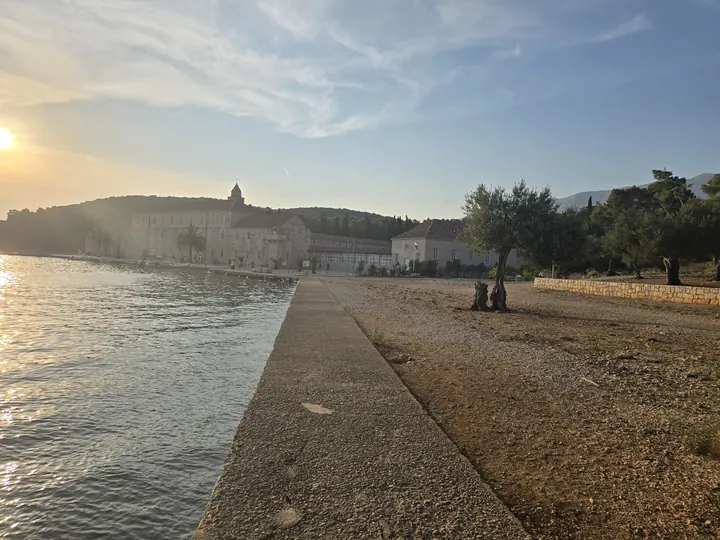
Today the Franciscan monastery is active again, but only in summer. People come here on religious retreats, and in winter just a few people come over every day to take care of the place.
How to tell the sea is clean (and which sea urchins you can eat)
On Badija, Boris pointed out a whole bunch of sea urchins on the rocks. His tip: when you see lots of sea urchins, you know the water is clean. When you see lots of jellyfish, it isn't.
He also said some sea urchins are edible, but not all of them. The edible ones, he told us, are the ones with little stones stuck on top. The black ones aren't tasty at all. (I'll take his word for it!)
Sunset snacks and homemade Grk wine
Our last stretch was another 20-minute paddle to one more little island, Gubavac, for a snack and a drink, and then just a short paddle back to Lumbarda. Ollie and I were really struggling those last few minutes, I won't lie! But look at the view when we got there. So worth it.
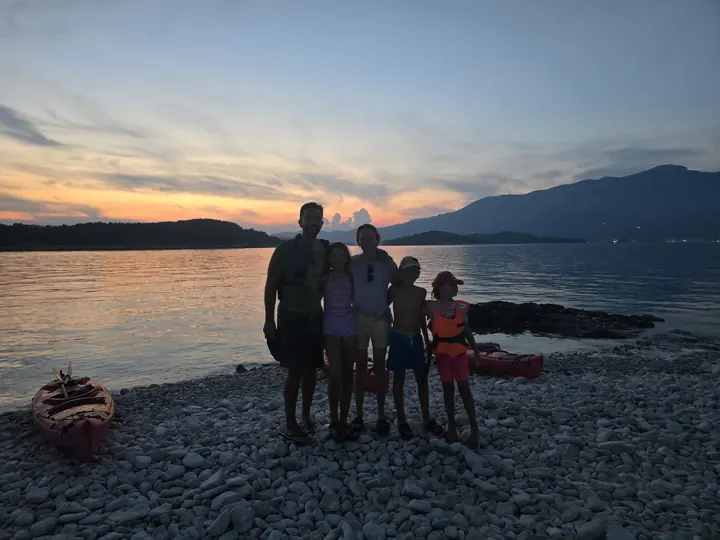
We had a refreshing swim, and then Boris brought out homemade pastries made with olive oil. Honestly, so delicious. We were starving after all that paddling, and I could have eaten a mile of them.
And then, the wine. Boris poured us a glass of Grk, the white wine Lumbarda is famous for. It comes from his family's vineyard on sandy soil, and his father-in-law makes it as a hobby and family tradition. It's quite strong, a little sweet, with a slight bitterness at the end. Fresh and so good. Watching the sunset over the islands with a glass of local wine after a few hours of paddling? Perfect.
Tips for kayaking in Korčula
- Go in the late afternoon. The sea was calm, the water was warm, and we finished with the sunset.
- Plan for about 4 hours. The legs between islands are around 20 minutes of paddling, with stops to swim, walk and snack.
- Be ready to work a little. It's fine for beginners and kids, but your arms will feel it!
- Bring a swimsuit, a hat, sunscreen and water. You'll want to swim at every stop.
- The route: Lumbarda → Vrnik → Badija → Gubavac → back to Lumbarda.
- Kids love it. Our three did great, and the deer on Badija were the highlight.
Would we do it again?
Absolutely. Honestly, I don't think we would ever have explored these tiny islands otherwise. With a kayak you can really get to these secluded beaches and little villages you might otherwise miss. And next time, Boris says we have to go hiking in the forest on Korčula. We will!
Have you ever kayaked in Croatia? Tell me on our YouTube video!
Want to add this to your Croatia trip? Sunset kayaking on Korčula is part of our 11 day Active Croatia tour and our honeymoon in Croatia. You can also explore the islands on a private boat day from Korčula, or tell us about your trip and Ivan and I will plan it with you.
Experience it with locals
Kayak Korčula with us
Sunset kayaking on Korčula is part of our 11 day Active Croatia tour, or explore the islands on a private boat day.
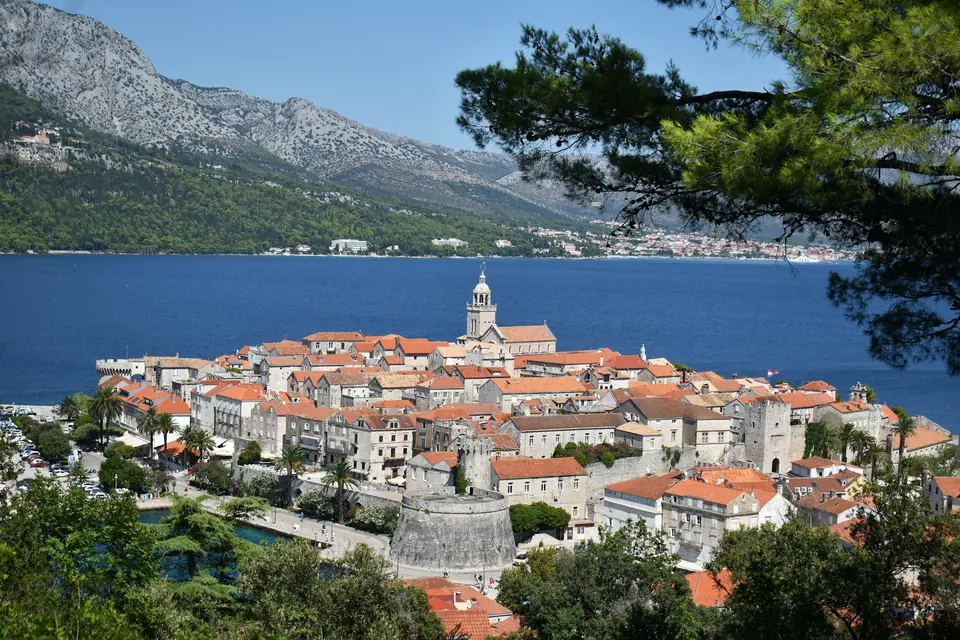
11 days · Rafting, kayaking, hiking & cycling
Active Croatia
Rafting on the Cetina, a boat day to Vis, kayaking on Korčula, hiking on Mljet and above Dubrovnik, and cycling with a…
Discover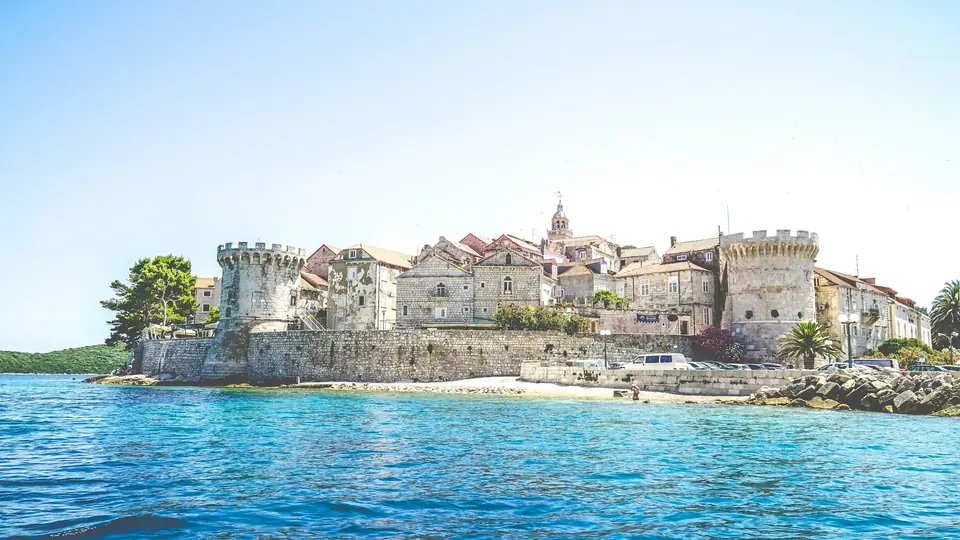
Full day · From Korčula
Korčula Archipelago by Boat
Embark on a full day, private boating excursion to the archipelago near Korcula to enjoy the Adriatic Sea in peace!
DiscoverAbout the authors
As a Canadian in Croatia, Sarah shares her favourite things to see and do, in hopes of helping others enjoy and explore this beautiful country.
Ivan is always searching for unique places and experiences to offer his guests, and shares some of his findings through the blog.